You’ve been sitting on that same stool at the RSL for three hours, the clatter of coins long replaced by digital chimes. The reels stop on a near-miss – two sevens and a blank. Then the machine flashes: “Re-spin available.” Your mate leans over and says, “Grab it, cobber – that’s your chance.” But what exactly just happened? Is the re-spin a genuine second shot at the jackpot, or is it just another way the house keeps you in the chair a little longer? Understanding how pokie machine re spin mechanics operate is the difference between playing smart and feeding the machine until it burps up your last twenty.
The truth is, re-spin features have become a staple across Australian casinos, both land-based and online. From the pokie dens of Crown Melbourne to the digital lobbies of Joe Fortune, these mechanics promise a second wind. But the way they function – and how they affect your odds – varies wildly depending on the game, the jurisdiction, and the operator. Let’s crack open the hood and see what’s really terminalcurahutama.co.id spinning.
The Anatomy of a Re-Spin: More Than Just a Second Chance
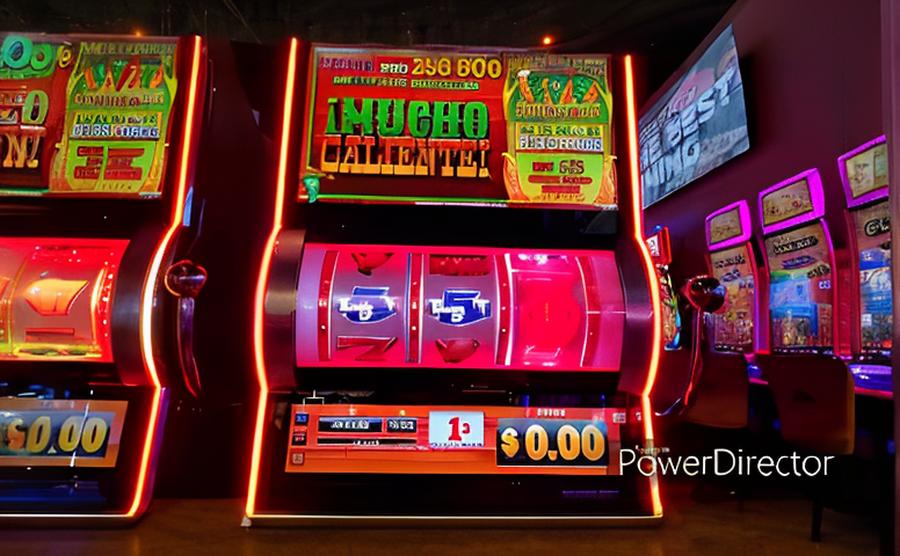
At its core, a re-spin mechanic allows one or more reels to spin again after an initial outcome, while the other reels remain locked in place. The player typically doesn’t pay extra for the re-spin – it’s triggered by a specific symbol combination, often a scatter or a bonus icon. But here’s the rub: the re-spin does not reset the random number generator (RNG) for the entire machine. Instead, the RNG generates a new outcome only for the re-spinning reels, while the held symbols stay fixed.a big candy casino no deposit bonus codes 2024
That means the re-spin is not a “free” spin in the traditional sense – it’s a conditional spin. The odds of hitting a winning combination on that re-spin are calculated based on the remaining reel positions. In many modern video pokies, the re-spin is programmed to land on a symbol that creates a win, but not necessarily the highest win. This is a subtle but critical point: the re-spin is designed to keep you engaged, not to dramatically increase your long-term payout. As Sophie O’Brien, Senior Market Analyst at Pacific Player Protection Institute, puts it: “Re-spin features are a classic example of ‘near-miss psychology’ – they give players a taste of a win without actually shifting the house edge.”
Australian gamblers, especially those in Sydney’s Star Casino or the suburban clubs of Parramatta, have seen this mechanic evolve over the past decade. Early re-spins were simple – one reel freezes, the rest spin. Now, games like Dragon’s Luck or 50 Lions layer multiple re-spins, cascading reels, and “hold-and-spin” bonuses that can run for a dozen cycles. The complexity is part of the appeal, but it also makes it harder for the average punter to calculate their true odds.
What the Re-Spin Doesn’t Tell You: RTP and Volatility
Every re-spin mechanic is tied to the game’s overall return-to-player (RTP) percentage and volatility. In Australia, the legal minimum RTP for pokies is typically 85% in most states, though many machines in clubs and pubs hover around 87-90%. Online casinos, like those offering a big candy casino no deposit bonus codes 2024, often advertise higher RTPs on their pokies – sometimes 96% or more – because they face less regulatory overhead. But the re-spin feature itself is part of the game’s mathematical model.
Take a high-volatility game: re-spins are rare but can deliver massive payouts when they land. A low-volatility game might give you re-spins more frequently, but the wins are smaller. The re-spin mechanic is calibrated to keep the machine’s overall RTP exactly where the developer intends. Benjamin Hughes, Compliance Director at Murray River Gaming Research, explains: “The re-spin is not a bonus – it’s a programmed feature that contributes to the game’s theoretical return. If you isolate the re-spin from the base game, you’ll see a different RTP, but combined it equals the advertised figure.”
So when you hit that re-spin, you’re not getting a free roll of the dice. You’re getting a carefully calculated second chance that fits inside the machine’s predetermined payout structure. The re-spin is part of the game’s “volatility profile,” and operators like Joe Fortune use it to attract players who want action without waiting for a full bonus round.
When Re-Spins Go Rogue: Hold-and-Spin and Feature Buy Mechanics
Not all re-spins are created equal. The most notorious variant is the “hold-and-spin” bonus, often seen in games like Lightning Link or Buffalo Gold. In this mode, the machine locks all reels except one, and you get a fixed number of re-spins. If you land a special symbol, the re-spin counter resets, and the reel locks. This can go on for a long time, creating a feeling of progressive buildup. But the RNG is still running behind the scenes – the machine is programmed to stop the feature after a certain number of spins, regardless of your luck.
Then there’s the “feature buy” mechanic, which is controversial in Australia. Some online casinos let you pay a premium to trigger the re-spin feature directly. This is legal in the Northern Territory and some online-only jurisdictions, but the ACT and NSW have stricter rules. The feature buy essentially bypasses the base game, but you’re paying a multiple of your bet – often 50x or 100x – to access a feature that still has a house edge. The re-spin mechanics in feature buys are identical to the triggered version, but the RTP is often lower because the operator takes a cut for the privilege.
For players in Brisbane or Perth, the hold-and-spin has become a staple at local venues. But the confusion around re-spin mechanics is real. Many punters assume that a re-spin means the machine is “due” for a win, which is a classic gambler’s fallacy. The RNG doesn’t have memory. Each re-spin is an independent event, even if the symbols on the held reels make it look like you’re getting closer.
The Regulatory Landscape: How Australian Laws Handle Re-Spin Features
Australia’s gambling regulation is a patchwork quilt. Each state and territory has its own rules about pokie machine features, including re-spins. In New South Wales, the Independent Liquor and Gaming Authority requires that all game features, including re-spins, be clearly disclosed in the game’s help screen. In Victoria, the Victorian Commission for Gambling and Liquor Regulation mandates that any re-spin mechanic must not mislead players about the odds of winning.
For operators and players alike, navigating these inconsistencies can be a minefield. A centralised hub for tracking the latest changes across jurisdictions would be a godsend, which is exactly what you can find at Medianet’s coverage. Their reporting helps cut through the confusion, offering a clear snapshot of how each state’s rules are shifting.
But the real issue is online casinos. The Interactive Gambling Act 2001 (IGA) prohibits Australian-based operators from offering “live” casino games and certain pokies, but offshore operators like Joe Fortune can still take Australian players. These offshore sites are not subject to state-level re-spin regulations. That means a re-spin mechanic on a .com casino might be designed differently than one on an Australian-licensed site.
Sophie O’Brien warns: “Players need to be aware that the re-spin features on offshore sites may not be audited by Australian regulators. The RTP and frequency of re-spins could be adjusted without the same transparency required in local venues.” This is why many savvy players stick to well-known brands that publish their game certifications, or they use resources like online industry news to check the latest compliance updates.
The Practical Side: How to Spot a Fair Re-Spin Mechanic
If you’re sitting at a pub in Toowoomba or a casino in Adelaide, you can’t change the machine’s programming. But you can choose which games to play. Here are key indicators that a re-spin mechanic is fair and transparent:
- Look for a detailed help screen that explains exactly which symbols trigger the re-spin and how many reels are held.
- Check if the game’s RTP is published. If it’s not, ask the venue or look for the game’s information sheet.
- Avoid games that offer “mystery” re-spins – if the machine doesn’t tell you why the re-spin triggered, it’s likely a gimmick.
- Prioritise games from known developers like Aristocrat, Ainsworth, or IGT, which have a long history of regulatory compliance in Australia.
- Observe the re-spin frequency. If you’re getting re-spins every 10 spins, the payout is probably low. If they’re rare, the potential win is higher.
- Understand that feature buy options are almost always a worse deal than waiting for a natural trigger.
- Use session limits. Even the best re-spin mechanic won’t overcome the house edge over time.
Comparing Re-Spin Mechanics Across Australian Platforms
When you look at the major Australian-facing operators, the re-spin features vary significantly. For example, Joe Fortune offers a range of RealTime Gaming (RTG) pokies that include “double re-spin” features, where two reels lock and the remaining three spin. The RTP on these games is typically around 96%, which is higher than the average pub pokie. In contrast, a land-based venue in WA might have older machines with a single-reel re-spin that only triggers on a specific symbol, and the RTP might be closer to 87%.
The key difference is volatility. Online operators like Joe Fortune can afford to offer higher RTP and more frequent re-spins because their overheads are lower. But they also have the ability to adjust the game maths behind the scenes. That’s why it’s crucial to read the game’s rules and not assume that a re-spin is a “free” chance. The house always has the edge – the re-spin just makes it feel like you’re fighting back.
Benjamin Hughes sums it up: “A re-spin is a feature, not a favour. It’s designed to make the game more entertaining, not to fix your losses. The moment you treat a re-spin as a guaranteed win is the moment you stop playing smart.”
The Psychology of the Second Spin: Why We Love Re-Spin Mechanics
There’s a reason re-spin features are everywhere. They tap into the “near-miss” effect, which is one of the most powerful psychological triggers in gambling. When you see two sevens line up and the third reel stops just next to the jackpot symbol, your brain releases dopamine as if you almost won. The re-spin then gives you a second chance to “correct” the near-miss. This illusion of control is potent.
In fact, some pokies are programmed to increase the frequency of near-misses specifically to encourage re-spin triggers. The re-spin itself is often weighted to land on a lower-paying symbol, so you get a small win that reinforces the behaviour. It’s the same principle as a slot machine giving you a 10-cent win after a 20-spin dry spell – it keeps you in the chair.
Remember the pub scene from the beginning? That re-spin you hit after the near-miss – it’s likely to give you a small win, maybe enough to cover your last few bets. Then you’re back in the game, chasing the big one. The re-spin mechanic is a brilliant piece of design, but it’s not your friend. It’s a tool that keeps the machine’s RTP exactly where it needs to be while making you feel like you’re getting a second shot.
The Final Spin: What You Need to Know Before You Tap That Button
The re-spin mechanic is a fascinating piece of engineering, but it’s not magic. It operates within the same mathematical framework as every other part of the pokie. The next time you’re at a venue in Surfers Paradise or grinding through a session on Joe Fortune, remember that the re-spin is just another spin. The RNG doesn’t care about your last loss. The machine doesn’t owe you a win.
So the next time the screen flashes “Re-spin available,” ask yourself: is this a genuine opportunity, or just the machine’s way of keeping me here for another ten minutes? The answer is almost always the latter. But if you understand how pokie machine re spin mechanics operate, you can at least make an informed choice. You can decide to take the re-spin, enjoy the thrill, and walk away when the feature ends. Or you can ignore it and cash out. Either way, the machine will keep spinning. The question is whether you will too.
Leave a Reply